
It’s Never Been Easier to Start a Tech Company—Thanks to AI
Starting a new company, especially in the tech space, has never been simpler. No need to lease office space or build your own server room full of expensive equipment. With co-working spaces, remote work, and a vast array of SaaS (Software-as-a-Service) products, setting up a business is faster and more cost-effective than ever before.
And now, with the rise of generative AI, launching a company has become even easier. In this post, I’ll share how I’m using AI to help ramp up my seventh startup, Yonder (recently rebranded from CombiMatix AI.
Yonder: Where Lab-on-a-Chip Meets AI

I joined Yonder as CEO in June, just as we were preparing to launch. The two founding scientists had developed an incredible platform for accelerating materials discovery. And what I’ve learned since then is this: the discovery of new materials is the foundation of technological advancement, driving breakthroughs across industries like energy, healthcare, and even quantum computing. Yet, less than 1% of all possible chemical compounds have been explored. Why? Traditional R&D is slow, costly, and still too reliant on trial and error.
At Yonder, we’ve developed a platform that combines Lab-on-a-Chip technology with AI-driven discovery to radically speed up materials exploration. By miniaturizing a traditional chemistry lab onto a microchip, our Lab-on-a-Chip can run thousands of experiments simultaneously—at a fraction of the time and cost. Better yet, our proprietary AI supercharges the process, enabling discoveries 10x faster (and improving) and at just 10% of the cost compared to traditional methods.
I’ll dive into the specifics of our AI in future posts—stay tuned!
Leveraging AI Tools
As the CEO, my first big job is raising funds. This means I needed to quickly get up to speed on the materials science industry and craft a compelling pitch. There are plenty of AI tools out there, but I relied mainly on Perplexity for research. It’s a fantastic resource, providing citations with its information, which reassured me I was getting validated data.
Since the Yonder platform was already operational, my focus turned to go-to-market tasks like market sizing, identifying target audiences, understanding customer journeys, building a launch plan, and, of course, creating marketing content. For these tasks, I leaned heavily on ChatGPT from OpenAI. I’ve been using ChatGPT since my previous company, TenPoint (Addy), and had already developed custom prompts to train it on my writing style and different personas.
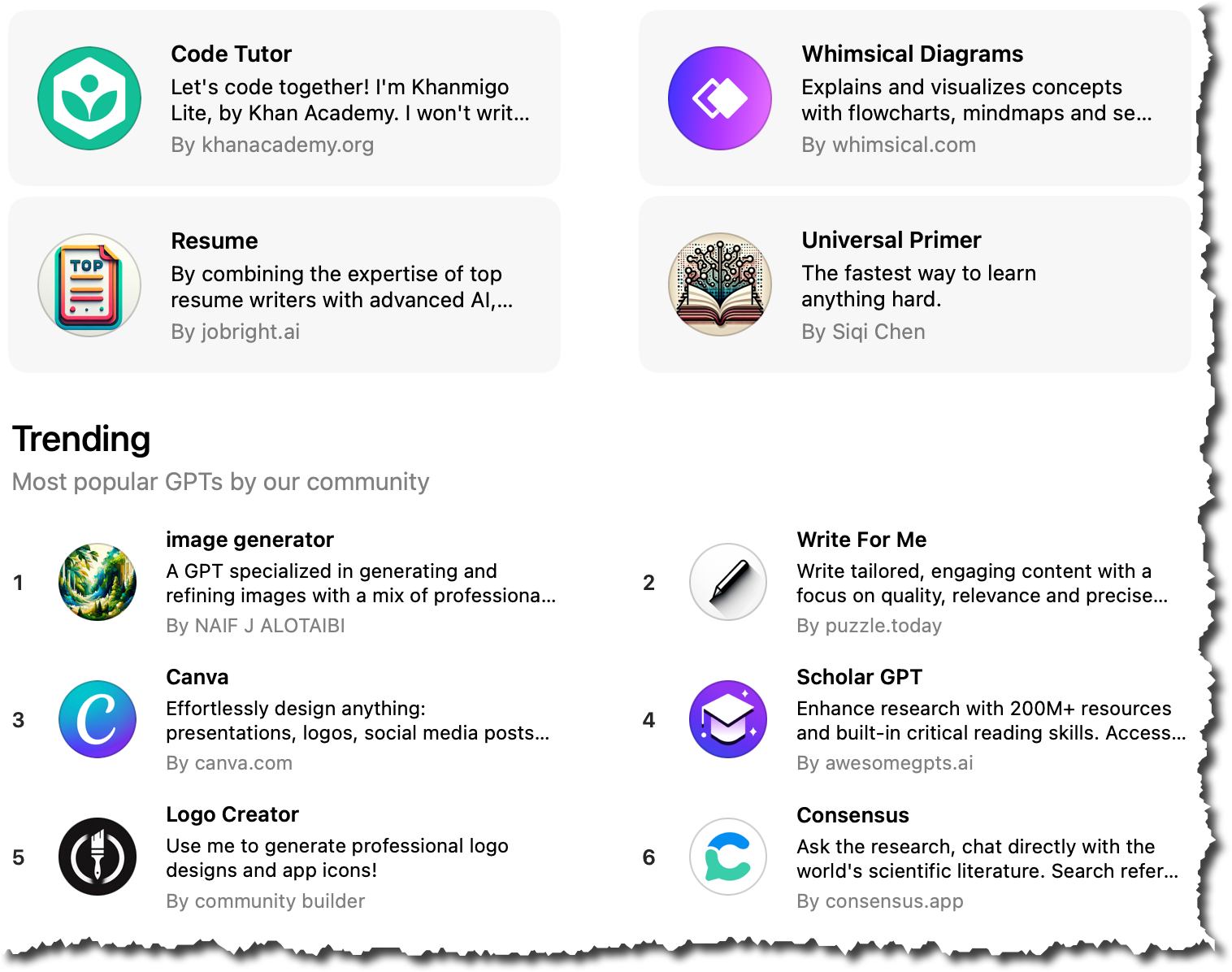
There’s also an exciting ecosystem of GPT plugins and prompt marketplaces out there, like PromptBase (over 150K curated prompts), PromptHero (general marketplace), ChatX (for developers), and Prompt.ai (for writing). One of my favorite tools is a plugin called “Mean VC”—it simulates pitching your startup to a tough venture capitalist. It’s brutal, but incredibly helpful! (Though, it’s not publicly available yet, a few VCs offer access.)
With these AI tools, I’ve been able to:
• Build buyer personas
• Quantify market size
• Write specialized content
• Create design mockups
• Discover relevant venture capital groups
It’s important to note that in each case, I start by writing or designing something myself, then turn to AI to enhance or refine it. In my experience, asking AI to generate content from scratch rarely delivers the quality I’m after. But as a co-creator, AI is a game-changer.
Lately, I’ve been impressed with Google’s Notebook LM for research (I covered this in a previous post). It’s great for summarizing complex materials science papers, webinars, and so on. And the blog post generator feature? Amazing—it’ll only get better with future updates.
Conclusion
Thanks to AI, I’m wearing many different hats—creating pitch decks, researching complex new fields in days (instead of months or even years), developing go-to-market strategies, and when I was with my last company even generating code alongside my team. It’s astonishing how much I can achieve today, especially compared to my 20s and 30s when I was grinding through 14-hour days.
The implications of AI are enormous, not just for businesses but for society as a whole. I know some people worry about AI taking over jobs… and it certainly will, but it will also provide some opportunities. I’ll dive into that in future posts. But in the meantime, if you have some thoughts, I’d love to read about it in the comments section below and converse with you.
For now, I can confidently say that I’m more productive than ever, and I have AI to thank for it.
If you’re an entrepreneur with limited resources/time, I encourage you to start integrating AI into your workflow. It’s an investment that pays off quickly.
 Meet John Song